

The carbon bomb we can’t afford
The companies deciding Bangladesh’s energy future can still choose renewables over coal and fossil gas.
Let’s keep fossil fuels out of Bangladesh to protect people, beautiful beaches and forests, the economy, and our shared climate.
MIDI plans to bring heavy industry and fossil gas power to Chattogram, threatening local people and the environment.

13 GW of new liquefied natural gas (LNG) power

73,000 acres of land required

776,000 people potentially displaced
Companies Under the Spotlight


Japan's public finance is shaping Bangladesh's energy future.
📍 Japan

JERA is the largest power company in Japan and a major investor in fossil gas and LNG in Bangladesh.
📍 Japan

Sumitomo Corporation was involved in the controversial Matarbari 1 coal plant and continues to back new LNG projects.
📍 Japan

Major LNG supplier to Bangladesh, and operator of two floating gas import infrastructure.
📍 USA
A fossil-free future for Chattogram
Japan-backed companies plan to transform one of Bangladesh's most important coastal regions into a massive LNG hub, even though renewable energy could provide a cleaner and cheaper alternative.

Communities
Clean, healthy air, and more resilient local economies.

Climate
New LNG infrastructure locks in decades of emissions that contribute to worsening climate impacts.

Biodiversity
Coal, fossil gas and LNG projects are a threat to Chattogram’s beautiful beaches and forests.

LNG to Renewables
Renewable energy like wind, solar, battery and storage are the better alternatives for Chattogram.
Voices from Chattogram
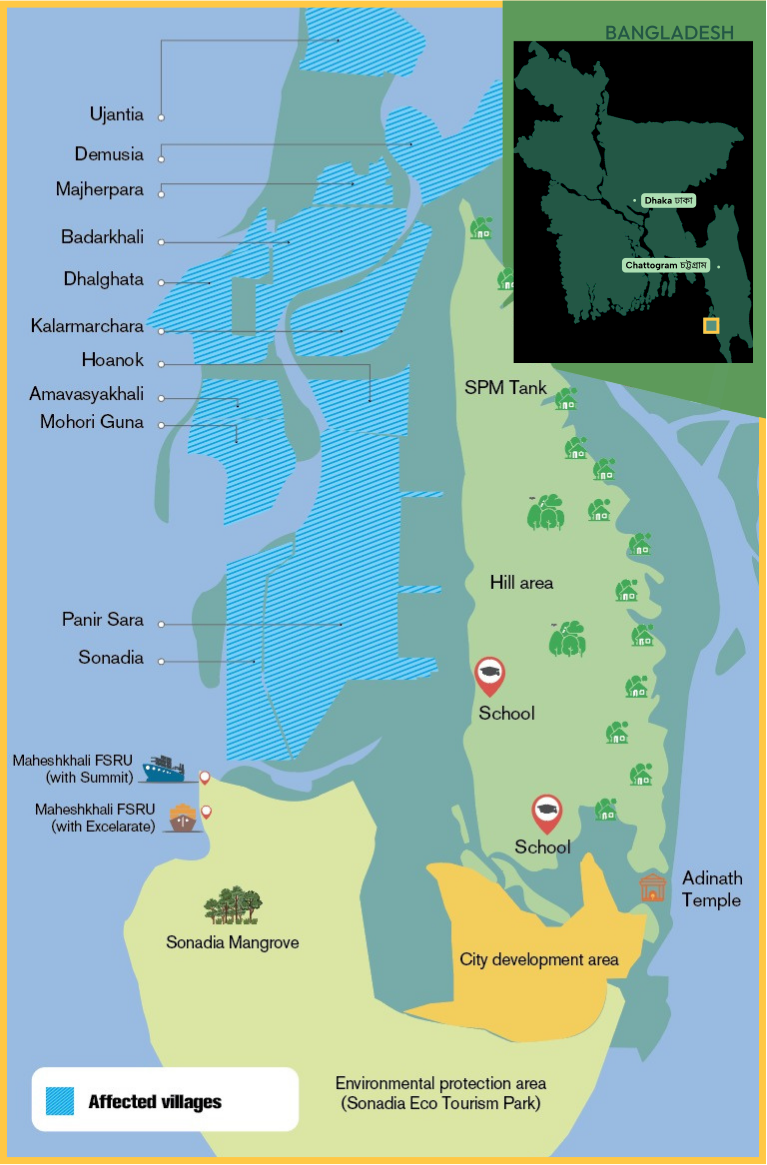
This map shows the area MIDI will impact in the Chattogram region
Let’s make Chattogram fossil-free!
Protect Chattogram by sending a message to JICA, JERA, Sumitomo and others. These companies can finance renewables instead of fossil gas and LNG to transform Bangladesh's power system while protecting communities, biodiversity and the economy.
Expensive LNG Expansion: How foreign gas interests are a climate disaster for Bangladesh
November 2024
Bangladesh is facing an energy crisis, having suffered repeated blackouts caused by an increasing over-reliance on expensive and polluting fossil gas imports.
Rather than decreasing dependence on volatile international fossil fuel markets, and prioritising clean domestic renewable energy, Bangladesh is being pushed by foreign interests to double down on liquefied natural gas (LNG).
Bangladesh can choose a pathway with clean, green, renewable energy that will protect the environment and allow people to enjoy cheap, affordable electricity.